Friday, 20 April 2012

Research in a typical thriller synopsis

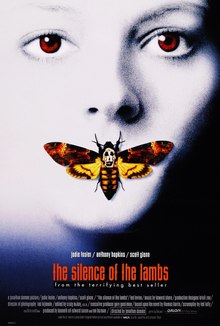
Thriller films usually have a typical story line that happens, and they all have similar narratives. The fact that my group and I want to make the first 2 minutes of a thriller film, I would want to have almost the same narratives as the best thriller films  of all time. The example of a great thriller film is The Silence of the Lambs (1991).

The Silence of the Lambs, which was first viewed in 1991, directed by Johnathan Demme, written by Ted Tally but the book was written by Thomas Harris, starring stars such as Jodie Foster, Anothy Hopkins and Lawrence A. Bonny is all about a young FBI agent who goes by the name of Clarice Starling in the film is assigned to help find a missing woman to save her from a psychopathic serial killer ho skins his victims. Clarice attempts to gain a better insight into the twisted mind of the killer by talking to another psychopath Hannibal Lecter, who used to be a respected psychiatrist. FBI agent Jack Crawford believes that Lecter who is also a very powerful and clever mind manipulator have the answers to their questions to help locate the killer. Clarice must first try and gain Lecter's confidence before he is to give away any information. In the opening week this film made a massive $13 million whilst working on a budget of just around $19million. The reason why I know this is a thriller genre is because of the fact that crime is the main storyline in this film, and in most thriller films. Also I know it is a thriller film because it has a complex narrative to it and it leaves to audience with clues and with false paths to keep them on their feet and to keep them guessing what is going to happen next and linking back to that, an enigma is create where the film itself creates questions that the audience have to answer for themselves. The film reason that I know it is a thriller film is that it is all about murder and there is an investigation toward the murder and that happens in most thriller  films.

Thursday, 19 April 2012

Iconic Sound Connected with the Thriller

I'm going to making my own 2 minute opening of a thriller film and I want it to be good as possible, and the reason why I want to research on iconic thriller sounds because it would give me inspiration to do so.


To find out more I need to do some research into films iconic sound track of Jaws (1975):


Jaws
This thriller film is all about a great white shark that has be menacing a small island and a police chief, and marine scientist and a fisherman have set out to stop it. This films was directed Steven Spielberg and has one of the most iconic sounds in thriller film history. The music that is getting played in the opening of the film by John Williams is one of the most iconic sounds in film history. The pitch of the music starts of very low, almost a muffle sound, and the rhythm is the music is slow before it starts to speed up a bit. This is to create a sense of tension in the film and leaving the audience in a frame of mind where they are thinking ‘What is going on?’ ‘What is going to happen?’ in there next scene at their fire camp, there is dialogue and people socialising with each other and the only music you can hear is the one of the playing the harmonica and we go to the next scene and see a male and a female going skinny dipping, but on the girl gets in the water and that when new dramatic music begins to play. Whilst the girl is swimming the camera shows something coming from underneath her and it camera is at the shark point of view and that’s how the audience knows something bad is going to happen. Then we start to hear music as the shark gets closer to the girl, and as the shark the closer and you can feel the tension in the music, and when the shark finally gets the girl at first the music stops as she goes down into the water. Then as she starts to get dragged around and begins to scream, the music comes back on again and as she gets pulled back into the water the music stops and you can only hear the sound of the ocean. This shows that if not for the music the audience wouldn’t have known that she was in trouble, and on the music helped us to know.  


Wednesday, 18 April 2012

Coventions of a Thriller and Sub-Genres

In thriller films we see a lot of things, but there are things that we see on the big screen are all planned and all thriller films are set in a certain way to grab the attention of the audience. When planning a thriller film, you have to take into consideration these conventions:

-          Crime is the main story
-          A complex narrative structure with clues and false paths
-          Enigmas are established
-          Protagonist (good guy) drawn into a web of conspiracy  and trouble by the antagonist (bad guy)
-          Extraordinary events happening in ordinary situations
-          Themes of identity and voyeurism
-           The opening scene often places the protagonist in danger

As well as thriller being a genre on its own, there are different types of thriller and these are called a sub-genre. A sub-genre is a derivative of that genre. Examples of these are:
-          Action-Thriller
-          Conspiracy-Thriller
-          Crime-Thriller
-          Disaster-Thriller
-          Psychological-Thriller
-          Spy-Thriller
-          Supernatural-Thriller

In this blog I am going to talk about Conspiracy Thrillers.
Se7en PosterConspiracy thrillers (also known as ‘paranoid thrillers’) are generally about journalists or amateur investigators who get themselves mixed up in conspiracies which go all the way to the top. These are often used to “recreate” what might have happened during a historical event. The protagonist often struggles to uncover the conspiracy and contain ‘man-in-peril’ stories (very rarely ‘woman-in-peril’) and are similar to detective stories.
 The link below is a trailer of an example of a conspiracy film. The title of the film is Se7en (1995) directed by David Frincher, starring stars such as Morgan Freeman and Brad Pitt. This film is about two detectives, a rookie and a veteran, hunt a serial killer who uses the seven deadly sins as his way of working and doing his job which is to kill people. This is a conspiracy genre because there is an investigation going on and the one of the people investigating is an amateur in terms of being a detective and the fact that one of his first case is to deal with a serial killer. Also the fact that the protagonist is really struggling to get to the bottom of the case. As well as that, the fact that it is a male who is the amateur investigator which normally happens in these films.

Friday, 13 April 2012

The Basics of Filming and Prelim Task

Match on action, over the shoulder shot, 180 degree rule and  shot reverse shot and four of the basics of filming and they ae the main things you have to know when you are filming and editing anything becuase if you dont follow these basics your production would go wrong. 


Match on action
A match on action, is a technique is used when editing film footage and it is a cut that bring together two different views of the same action. What the match on action shot does is that ti brings two shots togehter, and by careful editing it makes it seems as the seem that the motion continues uninterrupted. If your not careful with match on action shots, then you could have situation where you get a jump shot in your editing.The diagram below is an example of a match on action shot:


 http://gemmamerritt.files.wordpress.com/2011/02/match-on-action.jpg

Over the shoulder shot
this show is taken from behid the person who is talking, in other words the subject. Over the shoulder shots help the establish the position of each person wothen the shot and get the see reactions from both subjects in the shot and it helps the audience to see what the other persons point of view is like. It common to cut shots during a conversation to see the view between the different speakers. The diagram below is an example of an over the shoulder shot.


 http://accad.osu.edu/~midori/03_763/cinema/over_shoulder.jpg

180 degree rule
this is a one of the biggest and well known rule when it comes to filming. It is basically a guideline that states that both of the subjects in the same scene should always be filmed on either the left or the right side of thr subject and the camera has to be on that side throughtout that scene. The image below show what the rule is about:


Shot reverse shot
this is a film technique where one of the subject is shown looking at the other subject and then the other subject is shown looking back at the first subject. This image below shows this:


My Preliminary Task 

The names shown below are part of group 1, which was picked by my media teacher Laura Hopwood. These group members are part of the prelim task.
- Seun Jonah
- Denzel Aifuwa-Morgan
- John Martins
The prelim task must show the following:
- Dialogue (conversation)
- Match-on-match action
- Shot-reverse-shot
- Natural editing

The Roles In My Group:

- Seun Jonah - Actor/Co-Director
- Denzel Aifuwa-Morgan - Camera man/Co-Director
- John Martins - Editor
this link below shows my groups prelim task, that my group filmed and edited: 


Thursday, 29 March 2012

Certificate ratings – BBFC research


- Discrimination

- Drugs

- Horror

- Imitable behaviour

- Language

- Nudity

- Sex

- Theme

- Violence

Below are the certitficates the BBFC give to films:

It is impossible to predict what might upset any particular child. But a ‘U’ film should be suitable for audiences aged four years and over. ‘U’ films should be set within a positive moral framework and should offer comforting scenes of any violence, threat or horror.

If a work is particularly suitable for a nursery to view alone, this will be indicated in the Consumer Advice.


General viewing, but some scenes may be unsuitable for young children.

Children over the age of eight would be able to watch a PG film, but any age under that would have to be accompanied by a parental figure when watching the film due to the fact that they are content may upset younger or more sensitive children.


Exactly the same criteria are used to classify works at ‘12A’ and ‘12’. These categories are awarded where the material is suitable, in general, only for those aged 12 and over. Works classified at these categories may upset children under 12 or scenes that some parents will find unsuitable for their child.

The ‘12A’ category exists only for cinema films. No one younger than 12 may see a ‘12A’ film in a cinema unless accompanied by an adult and films classified ‘12A’ are not recommended for a child below the age of 12. An adult may take a younger child if they feel that the film is suitable for that particular child. In such circumstances, full responsibilities lie to the adult for allowing a child under 12 to view the film.

The ‘12’ category exists only for video/DVD works. No one younger than 12 may rent or buy a ‘12’ rated video work. The content in films of this age may have things like horror, mild language, mild nakedness and mild violence.


No-one younger than 15 may see a ‘15’ film in a cinema. No-one younger than 15 may rent or buy a ‘15’ rated video work. The content in films of this age rating may contain language, sexual themes, volience, inappropriate behaviour and nudity.


No-one younger than 18 may see an ‘18’ film in a cinema. No-one younger than 18 may rent or buy an ‘18’ rated video work. The content in films of this age rating may include things like discrimination, drug usage, language, nudity, inappropriate behaviour, sexual themes and violence.


The ‘R18’ category is a special and legally restricted classification primarily for explicit works of consenting sex or strong fetish material involving adults. Films may only be shown to adults in specially licensed cinemas, and video works may be supplied to adults only in licensed sex shops. ‘R18’ videos may not be supplied by mail order. In terms of the content of the film, this rating may include everything that the films rating is based on.


Information From The British Board of Film Classification (BBFC)

Wednesday, 28 March 2012

Storyboard and Script


Storyboard

What a storyboard means?Having a storyboard is vitally important in determining the success and quality of your movie. A storyboard is simply a sequence of images that tell what the scenes that your movie will go through. Your movie flow will follow what the storyboard depicts.


Examples of storyboards
This is an example of a storyboard, of one of Alfred Hitchcock's films Psycho (1960) that was given to me in my media studies class.

2nd Page
1st Page


Why is a storyboard important?
Clarity during development - By having a storyboard, the production team will be clear of what is expected of them and they will have a clear overall picture of what the whole movie will look like.

 Improved movie quality - A movie will be enjoyable when the camera angles are correct. That is when the zooming fits in nicely and the characters are properly portrayed. This is integral also for animation productions. So when all this is shown on the storyboard and errors are corrected, the final movie will be more enjoyable to the audience.

Cost reduction - Without a proper storyboard, the whole scene of a movie needs to be redone when it is deemed unsatisfactory. But with a storyboard, the scenes are laid out on paper and unsatisfactory ones can be redrawn using a new storyboard even before the movie goes into production. This saves time and resources.
My Groups Storyboard Plan (for the prelim task)  

This is a storyboard a member of my group made and it isn’t the best of drawings, but this gives an indication of what the film sequence is going to involve. What this storyboard explains is of a man, who wants his money back from an individual. But little did he know that the scared individual (man) hasn't got his money. So this creates a serious problem. 


Scripts


What a film script means?
A script is a written work that is made especially for a film or television program. Screenplays can be original works or adaptations from existing pieces of writing. 

Examples of a film scripts
Below is an example of a film script, of 'The Bourne Identity'.
DARKNESS. THE SOUND OF WIND AND SPRAY.

MUSIC.  TITLES.

EXT. OCEAN -- NIGHT

The darkness is actually water.  A SEARCHLIGHT arcs across
heavy ocean swells.  Half-a-dozen flashlights -- weaker
beams -- racing along what we can see is the deck of an
aging FISHING TRAWLER.

FISHERMEN struggling with a gaff -- something in the water --

A HUMAN CORPSE.

EXT. FISHING BOAT DECK -- NIGHT

THE BODY sprawled there.  The Sailors all talking at once --
three languages going -- brave chatter to mask the presence
of death --

SAILOR #1
-- Jesus, look at him --

SAILOR #2
-- what? -- you never saw a dead
man before? --

SAILOR #3
-- look, look he was shot --
(nudging the body--)

SAILOR #1
-- don't, don't do that --

SAILOR #2
-- he's dead, you think he cares? --

SAILOR #1
-- so have some respect -- it's a --
(stopping as--)

THE BODY MOVES! -- convulsing -- coughing up sea water -- the Sailors -- freaked -- jumping back -- standing there, as --

THE MAN begins to breathe.

My Group Film Script (for the prelim task)   


A male walks into a room (in a angry mood) where a female is located.
Seun
-- Where's my  money !!! --

Sandra
-- I don't know ??? --

Seun
--If you don't have my money by 24 hours, you know what going to happen to you !!! --

Sandra
--SHOCKED reaction-- 


This is my groups own film script (for the prelim task). The reason why it is short, is because the prelim task only lasts no longer than 1-2mins. As it only needs show required media aspects, such as 'shot reverse shot'.


Why a film script is important?
A film script is important because it allows the film stars, director, etc to know what is expected of them and they will have a clear overall picture of what the whole movie will look like. But most importantly film stars are occasionally allowed to go against the script and say something that not on it. Meaning film scripts are flexibly, just a indication of the narrative.


Monday, 26 March 2012

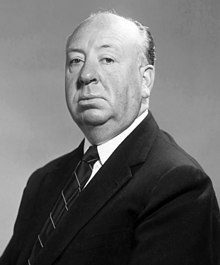
Alfred Hitchcock - One Of The Best

Sir Alfred Joseph Hitchcock, (13 August 1899 – 29 April 1980) born in Leytonstone, London, England, the second son and youngest of three children of William Hitchcock, was on of the best British film director, producer and cameo appearance actor. He led the way for many techniques in the suspense and psychological thriller genres. After a successful career in British cinema in both silent films and early talkies, Hitchcock moved to Hollywood.
His career was more than half a century long, and he fashioned for himself a distinctive and recognizable directorial style. He establised the use of a camera made to move in a way that mimics a person's gaze, forcing viewers to engage in a form of voyeurism. He framed shots to maximize anxiety, fear, or empathy, and used innovative film editing. His stories frequently feature fugitives on the run from the law alongside "icy blonde" female characters. Many of Hitchcock's films have twist endings and thrilling plots featuring depictions of violence, murder, and crime, although many of the mysteries function as decoys or "MacGuffins" meant only to serve thematic elements in the film and the extremely complex psychological examinations of the characters. Hitchcock's films also borrow many themes from psychoanalysis and feature strong sexual undertones. Through his cameo appearances in his own films, interviews, film trailers, and the television program Alfred Hitchcock Presents, he became a cultural icon.

Hitchcock directed more than fifty feature films in a career spanning six decades. Often regarded as the greatest British filmmaker, he came first in a 2007 poll of film critics in Britain's Daily Telegraph, which said: "Unquestionably the greatest filmmaker to emerge from these islands, Hitchcock did more than any director to shape modern cinema, which would be utterly different without him. His flair was for narrative, cruelly withholding crucial information (from his characters and from us) and engaging the emotions of the audience like no one else." The magazine MovieMaker has described him as the most influential filmmaker of all-time, and he is widely regarded as one of cinema's most significant artists.


Information from Wikipedia